

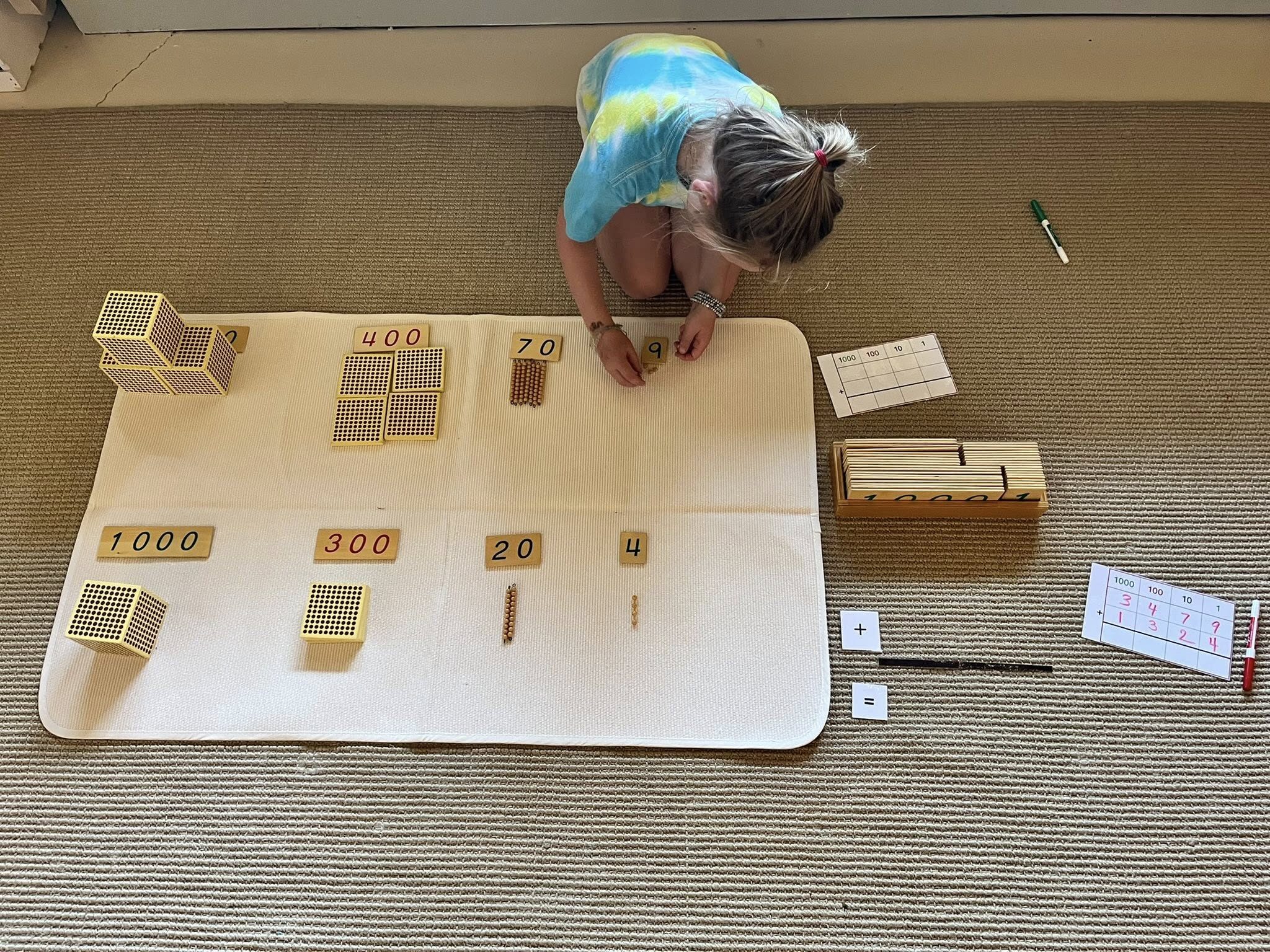
One of the most common concerns parents hear from teachers is:
“Your child won’t sit still.”
It sounds like a behavior problem.
But often, it’s a learning environment mismatch.
In a Montessori classroom, movement isn’t something children are asked to stop doing.
It’s something they’re expected to do.
Movement Is Part of Thinking
Dr. Maria Montessori observed something most classrooms still overlook:
Children don’t separate movement from learning.
They learn through movement.
Instead of asking children to sit still while information is delivered to them, Montessori environments invite children to:
- carry materials
- roll rugs
- pour water
- trace shapes
- build words
- count with beads
- walk the line
- work on the floor
- repeat activities with their hands
Movement isn’t a break from learning.
Movement is the learning.
Sitting Still Isn’t a Natural Starting Point
Traditional classrooms often expect stillness before concentration.
Montessori classrooms expect movement before concentration.
That’s a big difference.
When children move with purpose, something powerful happens:
- They begin to focus longer
- work more carefully
- repeat tasks voluntarily
- and develop real attention—not forced attention
What looks like restlessness in one environment often becomes deep concentration in another.
The Body Helps Build the Brain
Montessori materials are designed for the hands on purpose.
Children:
- stack
- sort
- carry
- match
- trace
- measure
- build
These actions help organize the brain.
This is especially true for children who:
- can’t sit still
- avoid worksheets
- lose focus quickly
- or seem constantly “on the go”
Very often, these children aren’t resisting learning.
They’re asking for the right kind of learning.
Movement Builds Independence
Another goal of movement in Montessori classrooms is independence.
Children aren’t expected to stay in one place waiting for instructions.
Instead, they learn how to:
- choose work
- prepare materials
- complete tasks
- return items
- care for their space
That physical responsibility builds confidence surprisingly fast.
And confident children concentrate better. ✨
This Doesn’t Stop at Age Six
Sometimes people hear about pouring, sweeping, or tracing letters and assume Montessori movement is just for preschoolers.
It isn’t.
Older Montessori students are still moving throughout their workday. It just looks different.
Elementary students:
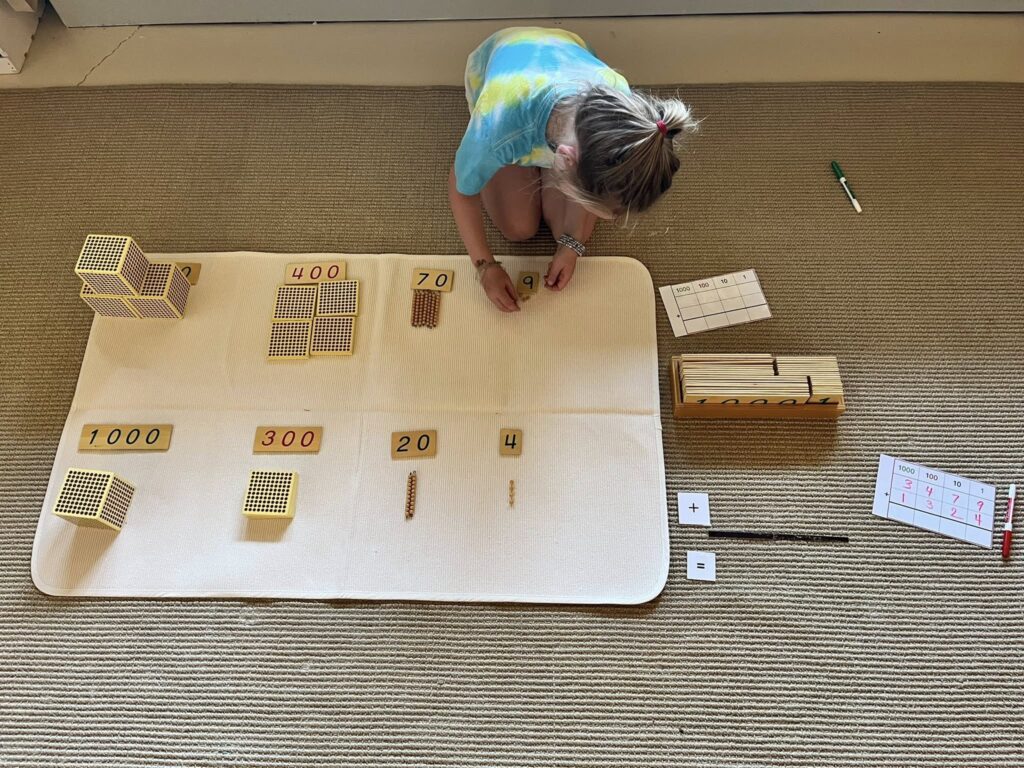
- build timelines across the floor
- walk while practicing math facts
- use bead frames and hands-on geometry materials
- act out history and grammar
- work on rugs instead of staying at desks
- move freely between subjects
Instead of sitting still for most of the day, they’re still learning with their bodies.
And something important happens during these years:
Movement becomes thinking in action.
Students aren’t just absorbing information. They’re organizing it.
Even Older Students Need Movement to Learn Well
By the upper elementary years, many traditional classrooms expect students to sit for long stretches of time.
But research—and Montessori classrooms around the world—continue to show the same pattern:
Students concentrate better when they can move with purpose.
Older learners benefit from:
- standing while working
- changing locations
- building models
- mapping ideas physically
- working collaboratively
- taking ownership of their workspace
Movement doesn’t disappear as children grow.
It becomes more sophisticated.
Montessori Isn’t a Preschool Strategy
It’s a developmental approach that follows the child from early childhood through adolescence.
When movement is removed too early, many capable students begin to look distracted, restless, or disengaged.
Sometimes the issue isn’t maturity.
It’s the environment.
Children don’t outgrow the need to move in order to learn. 🧠✨
They outgrow environments that don’t allow it.
I’ve Been There
When my son was in kindergarten and first grade, I kept hearing the same thing from his teachers:
He’s a great kid. Very creative. Full of ideas.
But he has trouble sitting still.
I was a young mom then. He’s 20 now. And I wish I had known then what I’ve spent years learning since.
There was nothing wrong with my son.
He was bright. Curious. Imaginative. Engaged with the world around him.
But the environment didn’t match how he learned best.
Like many parents do, we followed the recommended path. We did the testing. We confirmed ADHD. We tried natural supports first. Eventually we tried prescriptions and therapy because we wanted to help him succeed.
What I remember most clearly isn’t the diagnosis.
It’s the change in him.
A lively child who once overflowed with ideas began to look discouraged. Frustrated with himself. Confused about why he needed medicine just to function in school the way other children seemed to.
If I could go back, I wouldn’t change him.
I would change the environment around him.
Sometimes the Question Isn’t “What’s Wrong With My Child?”
Sometimes the better question is:
What kind of learning environment does my child actually need?
Many children labeled restless, distracted, or unfocused are responding normally to environments that ask them to learn in ways that don’t fit how their brains work.
Movement isn’t the problem.
Often, it’s the missing ingredient.
If Your Child Struggles to Sit Still…
It doesn’t automatically mean something is wrong.
Sometimes it means your child’s brain is asking for:
- hands-on work
- purposeful movement
- choice
- and time to repeat meaningful activity
Many children don’t need less movement.
They need better movement.
And when the environment allows it, focus often follows.